
Preventive Care
Security Health Plan encourages a preventive approach to healthcare including routine physical exams. Preventive care can help lower your risk for illness, disease and other health problems. It can also improve your chances of living a long and healthy life.
How does your plan cover preventive care and screenings? Start here to understand your coverage. This chart outlines how common preventive services are covered under your plan.
Not sure what preventive services are right for you?
Talk with your healthcare provider or explore personalized recommendations from the U.S. Department of Health and Human Services’ My Healthfinder Tool.
View recommended preventive services
Refer to your current Schedule of Benefits (SOB) plan document for a list of the preventive services currently covered by your plan. For quick access, log in to your My Security Health Plan online account to view your current Schedule of Benefits. Your Schedule of Benefits will be available upon your plan's renewal date – a preview of the preventive benefits covered for the current plan year can be found below.
Employer group sample Schedule of Benefits
Individual and family sample Schedule of Benefits
*The preventive benefits outlined in the sample employer group SOB apply to most employer groups – check with your plan benefits administrator at your employer for specifics about your plan.
Preventive or diagnostic care? What's the difference?
Learn the difference between preventive and diagnostic care and why it matters.
Your primary care provider and you
Primary care providers (PCP) are preventive care specialists who can help you reduce health risks and help you create lifelong healthy habits. They get to know you and your family, your work demands and exercise habits, and partner with you for the best health-related choices for you.
If you don't have a PCP, you can explore providers in your plan’s network using our Find a Doctor tool. Select any one of the following specialties and make an appointment for your preventive care visit:
- Family medicine: patients of all ages
- General practice: patients of all ages
- Geriatric medicine: patients age 65 and older
- Internal medicine: patients over the age of 18
- Pediatrics: patients from birth to age 18
How does Security determine preventive care coverage?
Security Health Plan continuously works to provide you with high-quality healthcare coverage and we follow the latest scientific evidence to guide our benefits. Our preventive benefits are aligned with nationally accepted evidence-based medicine guidance from the U.S. Preventive Services Task Force (USPSTF) recommendation and Affordable Care Act (ACA) requirements.
Security Health Plan covers important preventive care screenings at 100%, including:
- Screening colonoscopy, including the removal of polyps or other diagnostic procedures performed during the colonoscopy.
- Two hemoglobin (A1C) blood tests for diabetics annually.
- One scheduled diagnostic mammogram following a screening mammogram, covered at 100%.
- Prostate Specific Antigen (PSA) test: One diagnostic test annually covered at 100%.
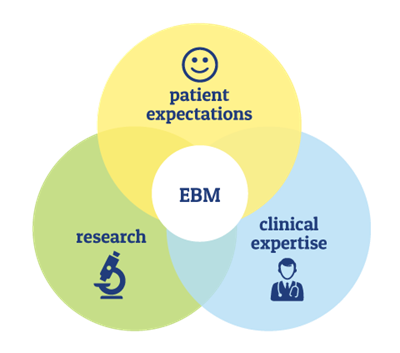
What is evidence based medicine?
Evidence based medicine is a combination of research, clinical expertise and patient expectations to deliver the right care at the right time to the right patient. We encourage our provider partners to use evidence based medicine in their daily practice. This means ordering tests and screenings that you need, based on evidence from scientific research. Numerous studies have shown that evidence based medicine improves patients’ health, reduces complications, and saves lives.
Be a smart healthcare consumer
Security Health Plan encourages you to be an educated healthcare consumer. Here are a few things you can do before and during your next visit with your healthcare provider.
Before you see your provider
-
 Read your plan documents; before receiving care so you are familiar with your plan’s benefits. You may view your plan materials online in your My Security Health Plan account.
- Find out what services you are scheduled for. If your healthcare provider has scheduled labs or screenings prior to your annual exam, ask which services they have requested so you can understand ahead of time how they may or may not be covered by your plan. Knowing which labs or tests you’re receiving before your appointment can prevent unexpected bills.